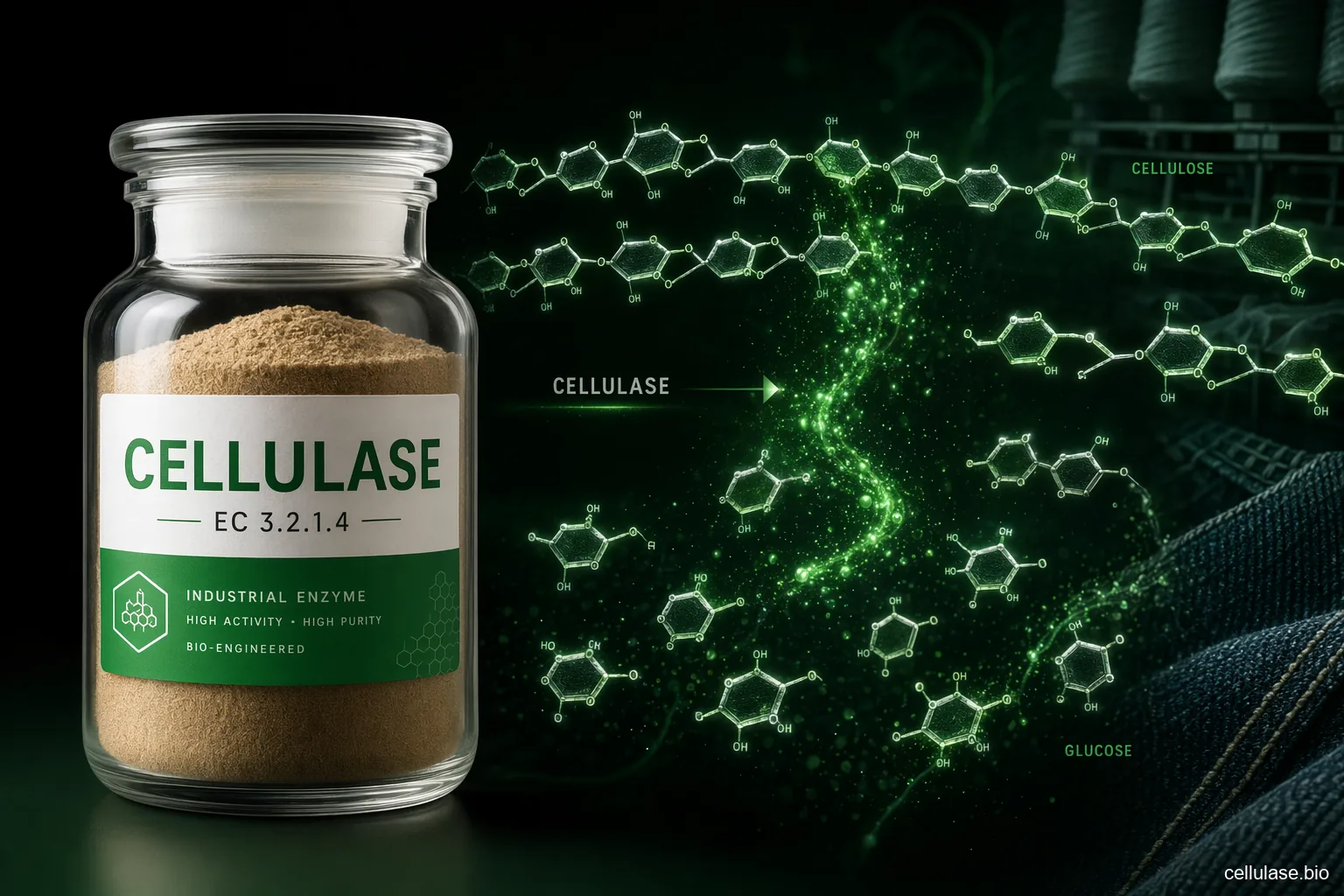
Applications
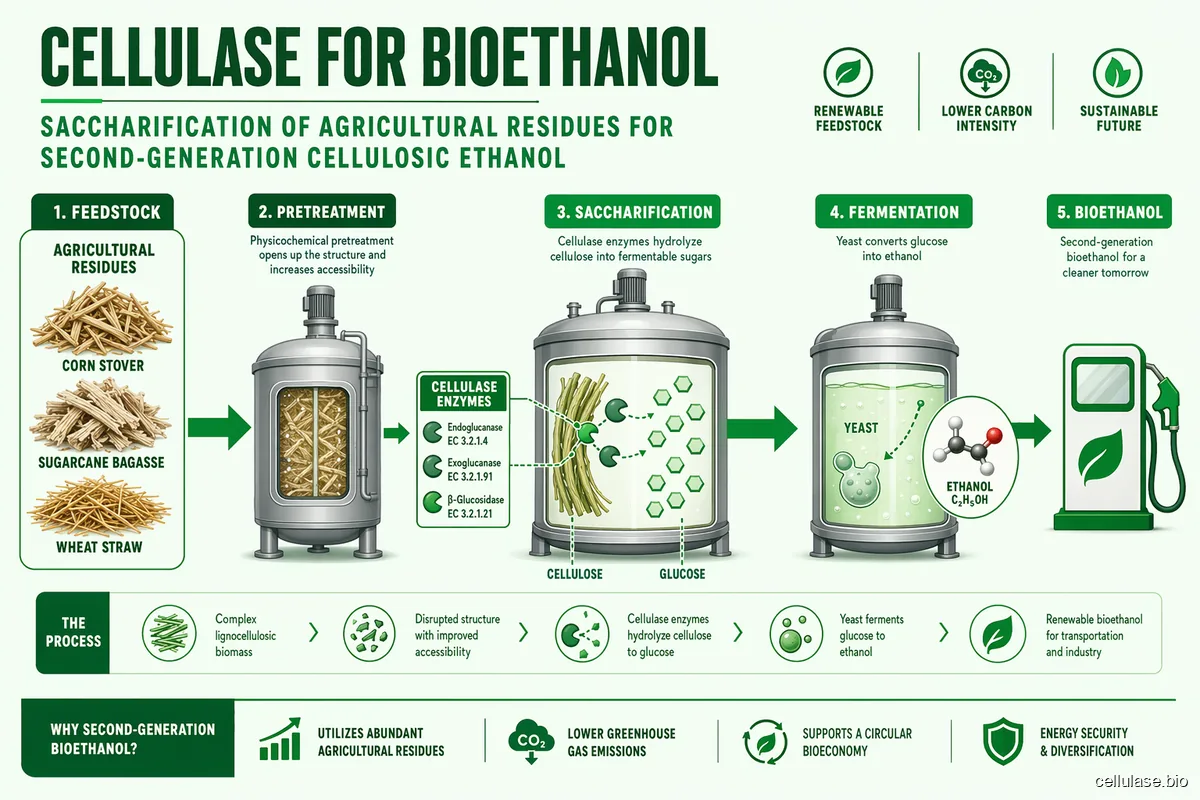
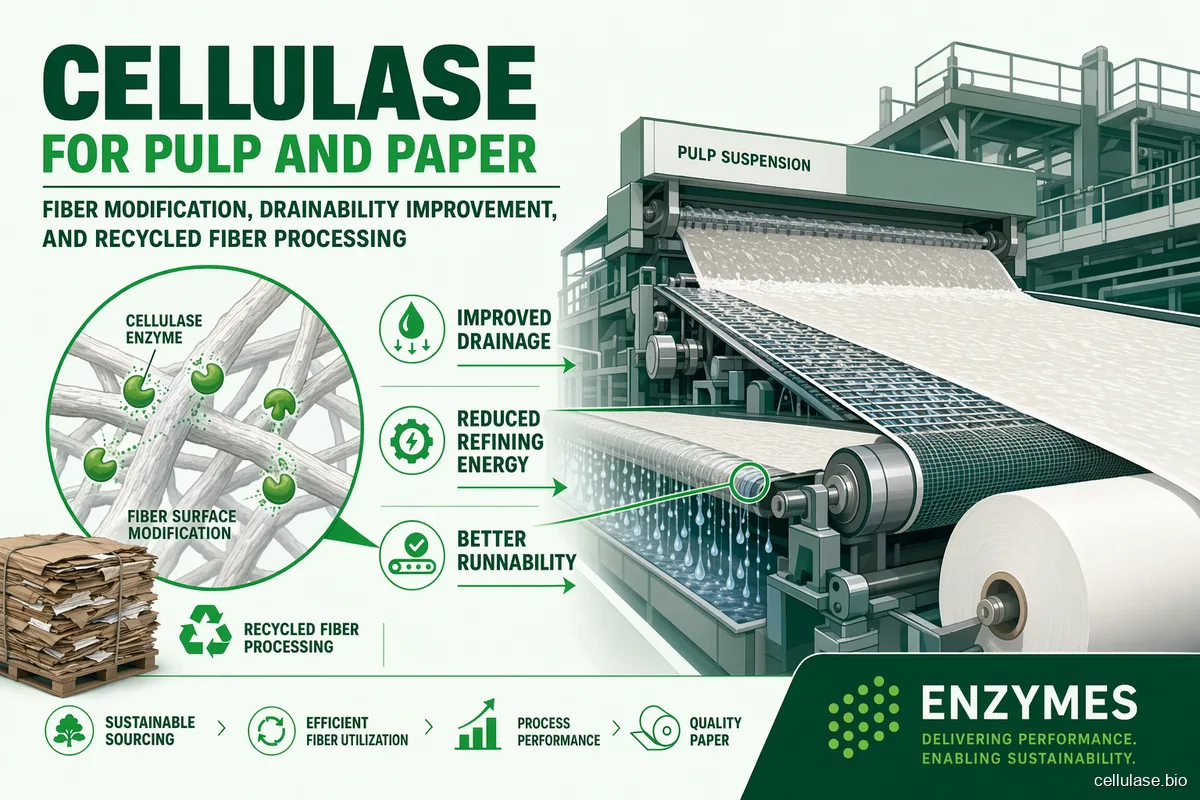
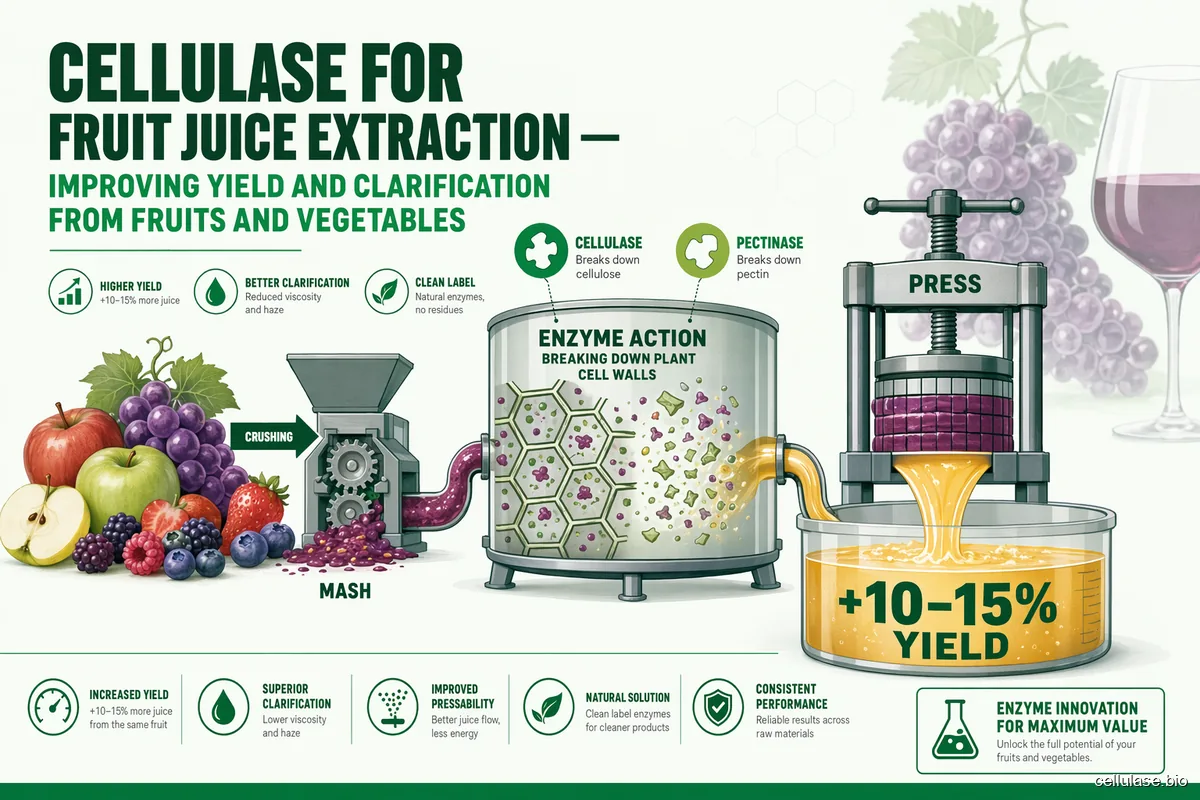
Bulk cellulase grades for the industries our buyers supply. Tell us the application, your process pH and temperature and the substrate, and we match a grade before quoting, so manufacturers and resellers trial the right product first time.
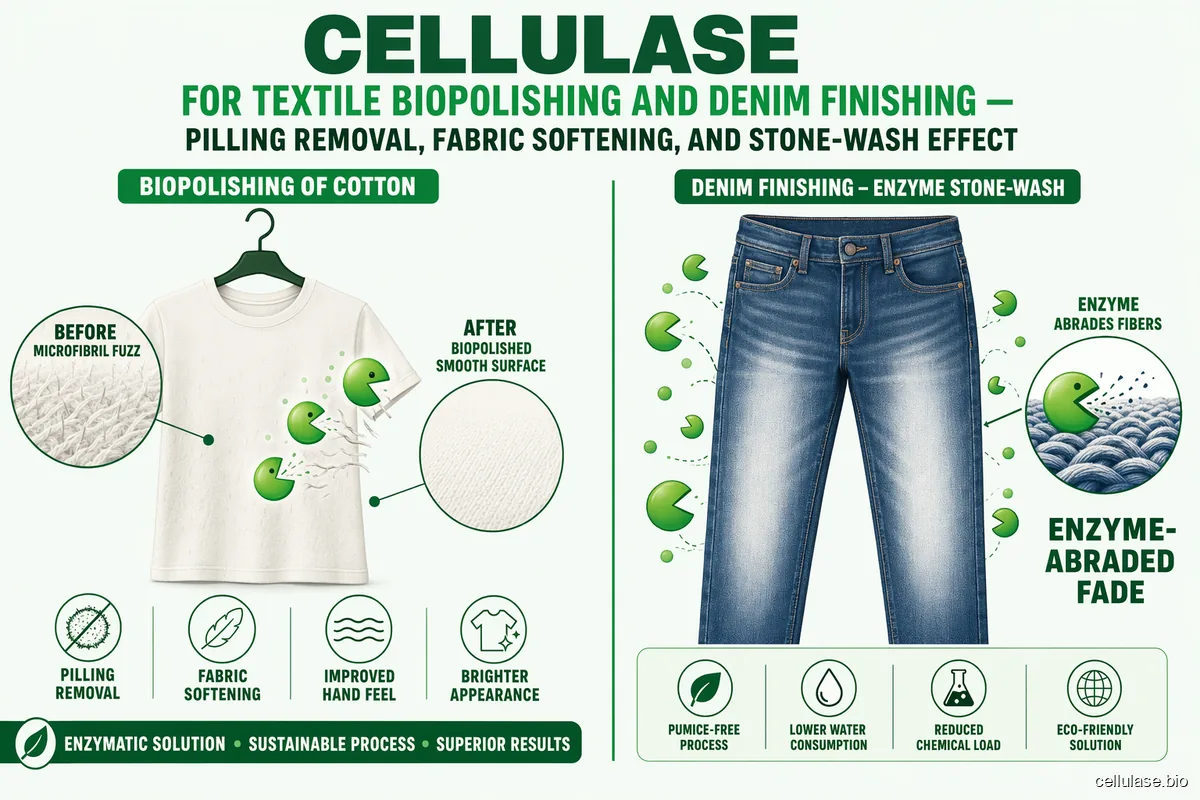
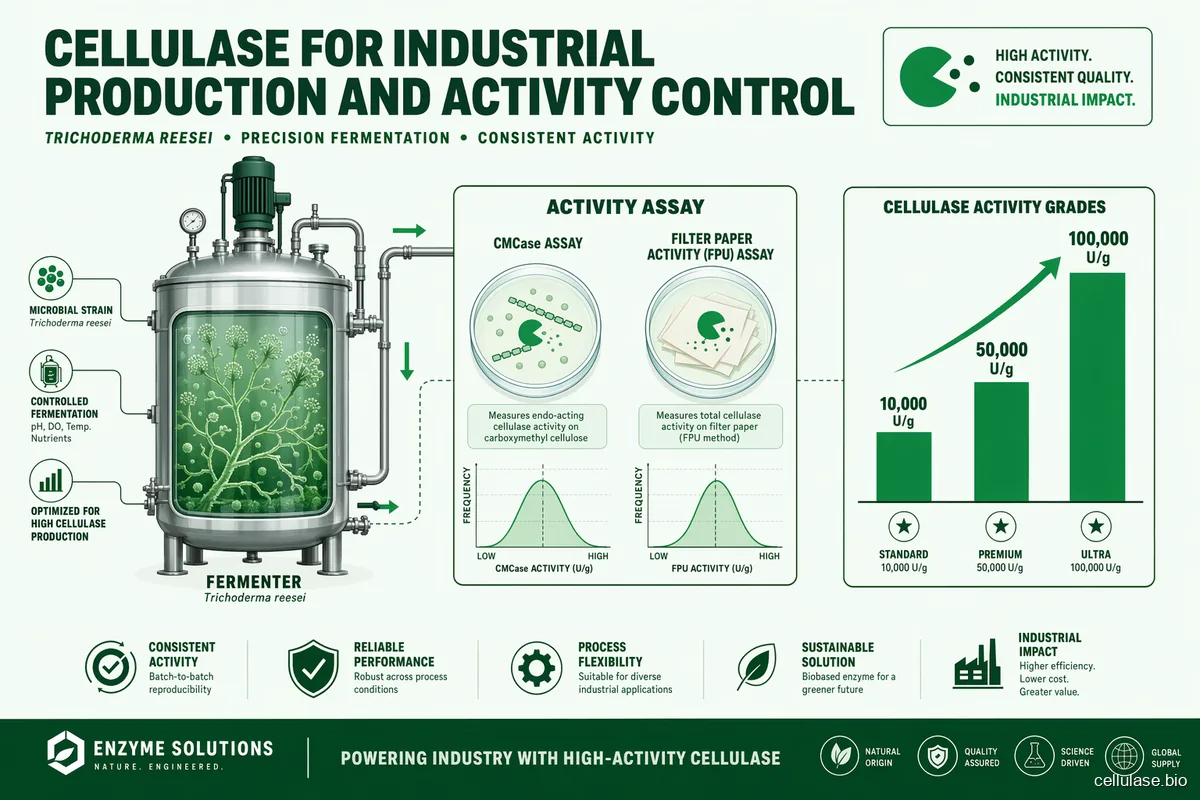
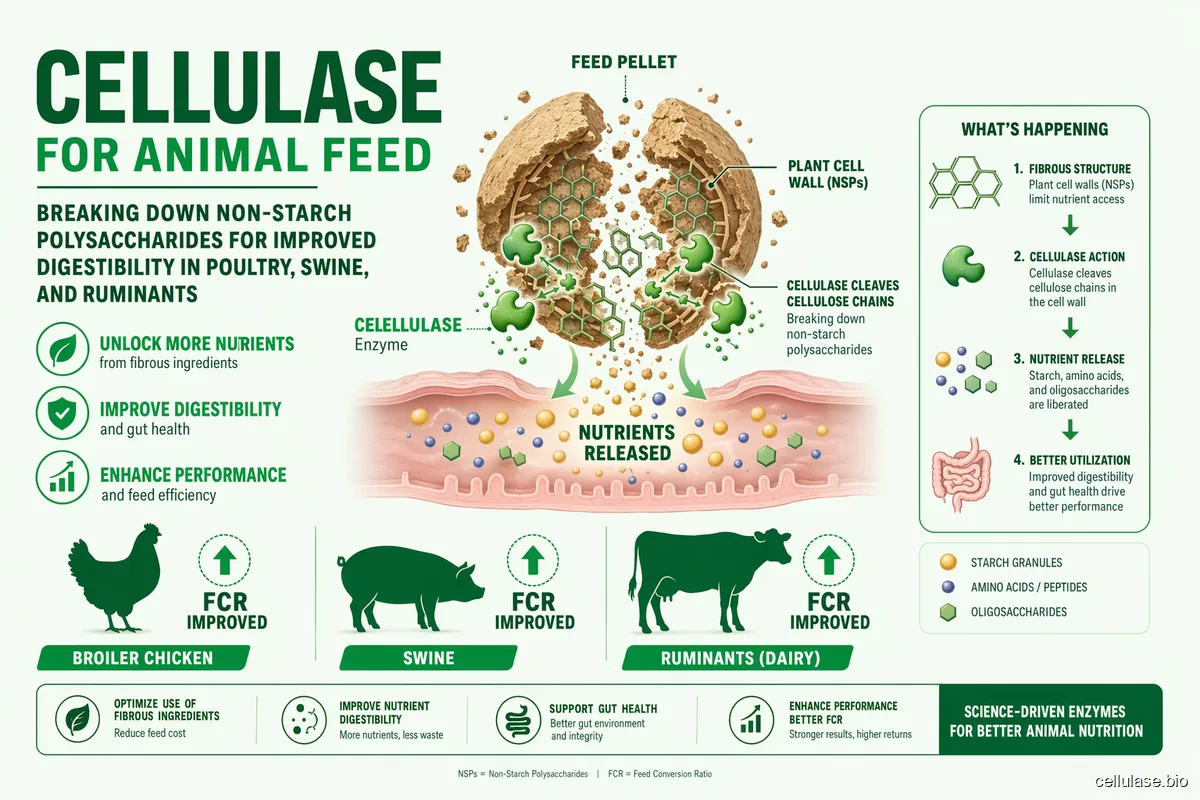
Product Specifications
| Enzyme Name | Cellulase (EC 3.2.1.4 / EC 3.2.1.91 / EC 3.2.1.21) |
| Activity | Multiple grades (powder & liquid) |
| Optimal pH | 4.0 – 6.0 |
| Optimal Temperature | 45°C – 60°C |
| Appearance | Light brown to brown powder or liquid |
| Source | Trichoderma reesei / Aspergillus niger |
| Shelf Life | 12 months (sealed, cool, dry place) |
| Packaging | 25 kg drums (powder) / 30 kg jerricans (liquid) |
| MOQ | 25 kg |
| Certifications | ISO 9001, HALAL, KOSHER, Food Grade |
Learn
Why Source From Us
Consistent Quality for Repeat Bulk Orders
Cellulase sourced and quality-checked for consistent performance across textile, feed, biofuel and paper applications, from the first trial lot to repeat orders for your own customers.
Process-Optimized Performance
Grades matched to stable cellulose degradation within pH 4.0–6.0 and 45°C–60°C, so formulators and plant teams get predictable results in their existing process window.
Compliance & Full Documentation
ISO 9001, HALAL, KOSHER, and Food Grade grades available. COA and TDS provided for qualified technical and procurement teams.
Adaptable Packaging & Quick Dispatch
Powder in 25 kg drums or liquid in 30 kg jerricans. MOQ 25 kg; larger volumes are quoted per order.
Frequently Asked Questions
Get a Free Sample & Quote
Share your application and volume requirements. Receive a free sample, COA, and pricing within 24 hours to support procurement decisions.
We have received your message. We will reply by email.