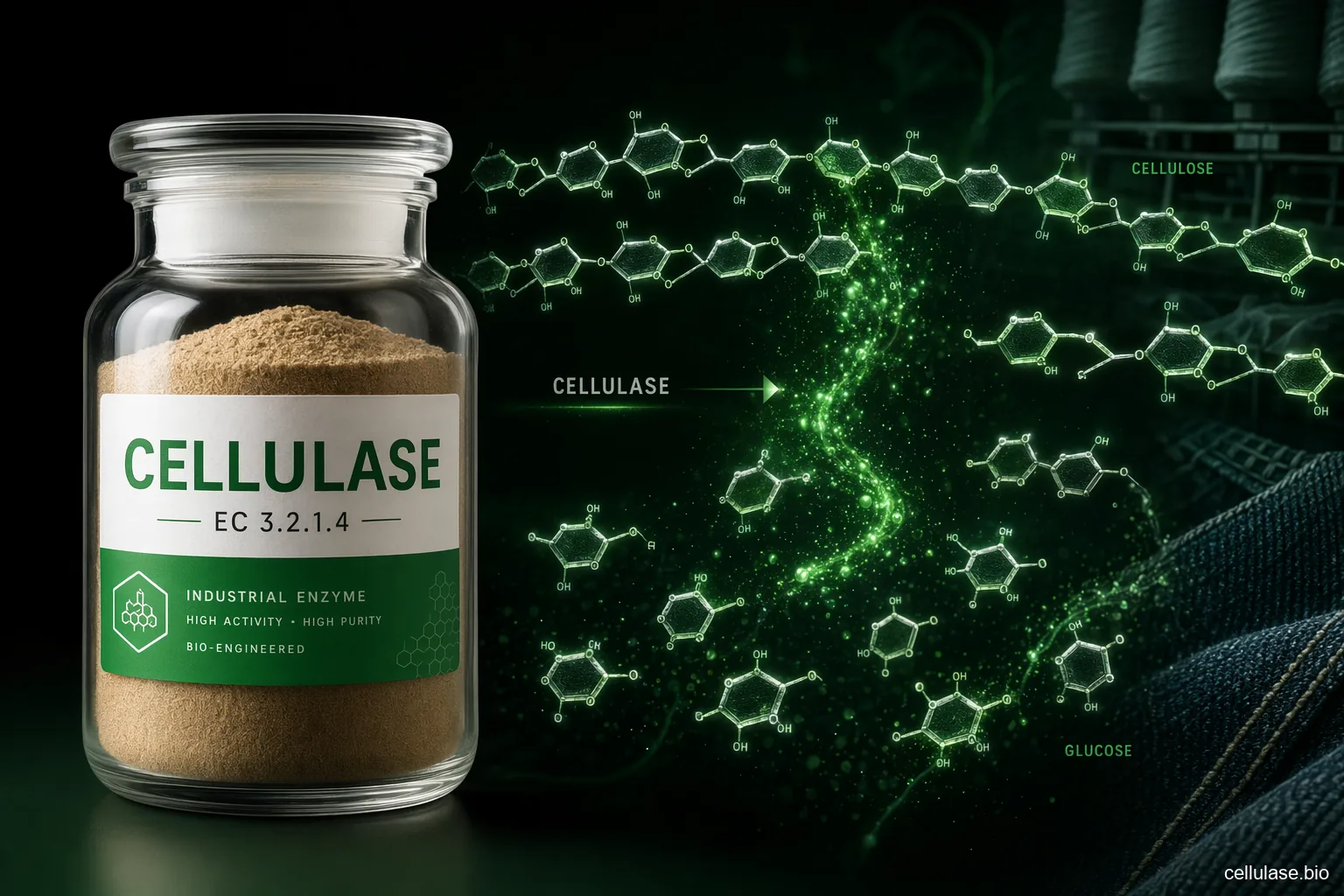
Cellulase for Textile Biopolishing and Denim Finishing — Pilling Removal, Fabric Softening, and Stone-Wash Effect
Use cellulase enzyme to remove surface microfibrils from cotton and denim, delivering pilling-free biopolished fabric and authentic stone-wash appearance without pumice stone or mechanical abrasion.
Short answer
Cellulase replaces mechanical abrasion in cotton and denim finishing. It hydrolyses surface cellulose so fabric loses fuzz and pilling propensity, and indigo-dyed denim fades to a stone-washed look without pumice. Acid grades act faster and fade harder; neutral grades are gentler on shade and carry less backstaining risk.
Textile biopolishing and denim finishing are two of the highest-volume applications for cellulase enzyme in industrial manufacturing. In cotton biopolishing, cellulase selectively hydrolyzes the protruding microfibrils on yarn and fabric surfaces — the short, loose cellulose fibers that cause pilling, surface fuzz, and reduced color brightness. By removing these microfibrils enzymatically, the fabric acquires a cleaner, smoother surface with less pilling propensity, brighter color, and improved hand feel, all without the mechanical stress of sanding, emerizing, or harsh chemical treatment. In denim finishing, cellulase enzyme creates the stone-washed appearance by acting on the indigo-dyed surface fibers of denim weave, abrading the surface cellulose structure to reveal the undyed yarn core beneath — the characteristic faded look of worn denim. This enzymatic stone-wash effect replaces or substantially reduces the use of pumice stone, which causes machine wear, generates difficult-to-dispose pumice sludge, and creates inconsistent abrasion. Cellulase enzyme from Trichoderma reesei and Aspergillus niger is produced in two commercially distinct types for textile use: acid cellulase (pH optimum 4.5–5.5, 45–55°C) and neutral cellulase (pH optimum 6.0–7.0, 40–50°C). Acid cellulases are faster-acting and provide more pronounced surface modification but require careful dosing to avoid backstaining (re-deposition of removed indigo dye onto fabric). Neutral cellulases offer gentler, more controlled action with reduced backstaining risk — preferred for fashion denim where color consistency is critical. Dosage in textile applications is typically 0.5–3.0% on fabric weight, with process time of 30–60 minutes at pH and temperature controlled within the enzyme's working range. The enzyme is inactivated at the end of the wash cycle by a brief alkali wash (pH > 9) or heat treatment, preventing ongoing cellulose damage after the target effect is achieved. For procurement teams in textile mills and laundry finishing operations, the key specifications are enzyme type (acid vs. neutral), activity grade, backstaining tendency, and consistency of the fading or biopolishing effect across production batches.
See what biopolishing is and how it finishes cotton for the full picture.
Updated · Cellulase Enzyme Solutions
Applications
Cotton fabric biopolishing for pilling reduction and color brightness
Cotton knitwear, woven shirts, and home textiles treated with cellulase enzyme at 0.5–1.5% on fabric weight, pH 4.5–5.5, 45–55°C, for 30–45 minutes achieve significant reduction in surface pilling propensity and improved color depth. The enzyme hydrolyzes loose surface microfibrils without damaging the main yarn structure, producing a cleaner fabric surface. The biopolishing effect is permanent across the product's wash life because the source of pilling — the loose microfibrils — has been removed enzymatically rather than masked.
Denim acid-wash and stone-wash effect
Acid cellulase enzyme at 1.0–3.0% on garment weight, pH 4.5–5.5, and 50–55°C for 30–60 minutes creates strong stone-wash fading effects on indigo-denim by aggressively abrading surface yarn fibers. The acid enzyme's fast action produces high contrast fading on seams, pockets, and high-abrasion zones. Backstaining is managed by short treatment times, enzyme inactivation at completion, and rinsing with anti-backstaining agents. This route is preferred for vintage and distressed denim where pronounced contrast fading is the design objective.
Denim neutral cellulase finishing for fashion and premium denim
Neutral cellulase enzyme at 1.0–2.5% on garment weight, pH 6.0–7.0, and 40–50°C for 40–60 minutes provides a gentler, more uniform surface modification with significantly reduced backstaining compared to acid cellulase. The neutral enzyme is preferred for fashion denim where even, subtle fading and clean cross-dyeing are required. Neutral cellulase biopolishes the surface fibers uniformly, giving a smoother fabric hand and a more wearable fading appearance without harsh contrast.
Combination stone-enzyme wash for denim with pumice reduction
Mills using legacy pumice stone washing can reduce stone load — and associated machine wear and sludge — by combining cellulase enzyme treatment with reduced pumice. Cellulase at 0.5–1.5% on garment weight, pH 4.5–5.5, and 50°C for 20–30 minutes precedes a short stone wash at 20–30% of the normal pumice load. The enzyme provides uniform cellulose surface modification, while the reduced stone provides targeted mechanical abrasion on seams and panel areas. This hybrid approach reduces pumice sludge volume by 60–80% while maintaining the desired denim appearance.
Product Specifications
Frequently Asked Questions
Source Cellulase for Your Textile Operation
Share your application and volume requirements. Receive a free sample, COA, and pricing within 24 hours to support procurement decisions.
Get Quote