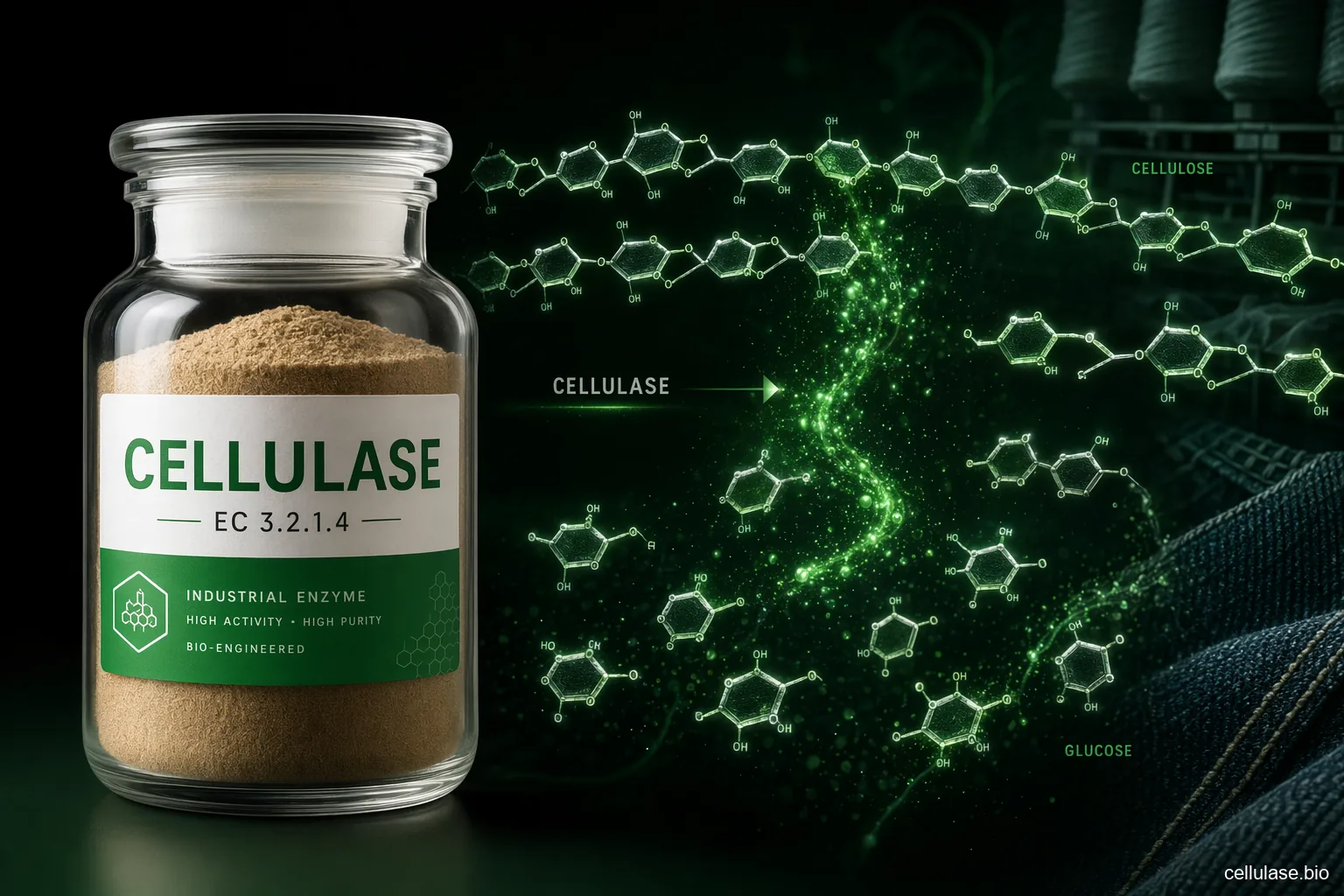
Cellulase for Fruit Juice Extraction — Improving Yield and Clarification from Fruits and Vegetables
Break down fruit and vegetable cell wall polysaccharides with cellulase enzyme to improve juice yield, accelerate press run-off, enhance color extraction, and support clarification in juice and wine production.
Short answer
Juice sits inside plant cells behind a wall of cellulose, hemicellulose and pectin. Treating crushed mash with cellulase — usually alongside pectinase and hemicellulase — breaks that wall down, so more juice runs out of the press, colour extracts faster, and the must clarifies sooner.
Fruit and vegetable juice extraction efficiency depends on the ability to disrupt plant cell wall structure and release intracellular juice from the vacuoles of parenchyma tissue. The plant cell wall is a composite of cellulose microfibrils embedded in a pectin-hemicellulose matrix, and this structure — when intact — resists the mechanical pressing forces used in belt press, basket press, and screw press juice extraction. Enzyme treatment of crushed fruit mash or vegetable pulp before pressing disrupts this cell wall structure, increasing cell membrane permeability, releasing intracellular fluid, and reducing the viscosity of the mash so juice flows more freely through the press cake during pressing. The enzyme complex most effective for fruit juice processing is a combination of cellulase, hemicellulase, and pectinase — often marketed as a macerating or juice-yield enzyme complex. Cellulase acts on cellulose microfibrils, hemicellulase (xylanase and arabinoxylanase) degrades hemicellulose cross-links, and pectinase (polygalacturonase, pectin lyase) degrades the pectin that holds cell wall structure together and contributes heavily to juice viscosity. Cellulase enzyme from Trichoderma reesei and Aspergillus niger operates at pH 4.0–5.5 and 45–55°C — conditions that align well with the natural pH of most fruit mashes (apple pH 3.5–4.0, grape must pH 3.0–4.0, berry mash pH 3.0–4.5). In juice yield improvement, the typical benefit from enzyme treatment of apple mash is 5–15% more juice per tonne of fruit versus unenzymated pressing, depending on fruit variety, ripeness, and pressing equipment. For grape must in winemaking, enzyme treatment at the crushing stage improves color extraction from skin cells (increasing anthocyanin in red wines), improves clarification rate (less settling time), and in white wine production, reduces the turbidity of the must before fermentation. For industrial fruit juice concentration producers, the economics of enzyme treatment are straightforward: 5–15% yield improvement more than pays for enzyme cost at typical commercial dosing rates, while improved press capacity and reduced processing time add secondary economic benefits.
See what cellulase is and how it breaks down cellulose for the full picture.
Updated · Cellulase Enzyme Solutions
Applications
Apple juice yield improvement with cellulase mash treatment
Apple mash is treated with cellulase enzyme at the dose established in trial, combined with pectinase at the same level, at pH 3.5–4.5 and 45–50°C for 30–90 minutes before pressing. The enzyme treatment degrades the pectin-cellulose cell wall matrix, increasing cell permeability and reducing mash viscosity. Juice yield improvement is typically 8–15% per tonne of apples versus unenzymated control, with improved press run-off and faster pressing cycle times. Clear apple juice production also benefits from faster sedimentation of particles in the settled juice.
Grape must cellulase treatment for red wine color extraction
Red grape must cellulase treatment at the dose established in trial, combined with pectinase, at 20–25°C (fermentation temperature) for 4–24 hours during maceration increases anthocyanin extraction from skin cells by disrupting the cell wall barriers between intracellular pigment and the must liquid. Cellulase at pH 3.0–4.0 operates more slowly than at its optimum but is active enough at maceration temperature to contribute meaningfully to improved color extraction and wine color stability.
Berry juice yield and color enhancement
Berries — blackcurrant, elderberry, blueberry, raspberry — have dense skin cell walls that require enzyme treatment to maximize juice yield and anthocyanin extraction. Cellulase enzyme at the dose established in trial, combined with pectinase and hemicellulase, at pH 3.5–4.5 and 45–50°C for 30–60 minutes before pressing gives 10–20% yield improvement and significantly higher pigment content in the pressed juice, supporting both juice yield economics and the high-value anthocyanin content claimed in functional juice products.
Vegetable juice and puree processing
Vegetable juice production from carrots, tomatoes, beets, and leafy vegetables benefits from cellulase enzyme treatment during maceration to improve extraction yield and reduce viscosity. Cellulase at the dose established in trial, at pH 4.0–5.5 and 45–55°C for 30–60 minutes disrupts the cellulose-based cell wall structure, improving juice expression during centrifugation or pressing. In tomato processing for paste and concentrate, cellulase treatment of the hot break pulp reduces viscosity before evaporation, improving concentration efficiency while maintaining the lycopene content of the finished product.
Product Specifications
Frequently Asked Questions
Source Cellulase for Your Juice or Winery Operation
Share your application and volume requirements. Receive a free sample, COA, and pricing within 24 hours to support procurement decisions.
Get Quote